Author: boringparts

  • iPhone Fold 2026: The $2,000 Foldable Rumor, Explained

    iPhone Fold 2026: The $2,000 Foldable Rumor, Explained

    Contents

    Every claim about Apple’s folding iPhone traces back to someone who isn’t Apple — analysts, supply-chain leaks, and one 9to5Mac reader poll published August 22, 2026. If you’re deciding whether to wait for it or buy an iPhone 18 Pro next month, here’s what’s solid and what isn’t.

    What We Actually Know So Far

    Nothing, officially.

    Apple hasn’t named it, priced it, or dated it. What exists instead is a pile of overlapping rumors clustering around a September 2026 launch alongside the iPhone 18 series. Five outlets — 9to5Mac, Tom’s Guide, ZDNet Korea, Yellow.com, and AppleInsider — have each published pieces this year treating the device as close to certain. None of them are Apple.

    So treat everything past this point as one of three things: an analyst estimate, a supply-chain leak, or industry chatter. I’ll flag which is which.

    iPhone Fold or iPhone Ultra? Nobody Can Agree on a Name

    The device doesn’t have a settled name yet.

    Tom’s Guide and Yellow.com call it “iPhone Fold.” 9to5Mac and ZDNet Korea call it “iPhone Ultra” — the name Bloomberg’s Mark Gurman floated in March 2026, which Weibo leakers picked up fast: one claimed on March 12, 2026 that “iPhone Ultra” was locked in, and a second leaker repeated the claim in early April. AppleInsider hedges with both names in the same headline.

    Two names, two camps, zero confirmation from Cupertino. If you see a headline stating the name flatly, that’s the writer picking a side, not Apple settling the question.

    Release Date: Why September 18 Is the Best Guess

    Short answer: probably September 18, 2026, a Friday. Maybe not.

    The rumor consensus puts the launch inside Apple’s usual September event, alongside the iPhone 18 Pro line. Yellow.com’s August 8, 2026 report gets specific: a September 9 (Wednesday) keynote, pre-orders opening September 12 (Saturday), and phones in hand by September 18. That’s a tight, plausible sequence — it matches Apple’s usual September cadence.

    But there’s a wrinkle. If the keynote slips a week, the whole chain shifts and launch day lands on September 25 instead. Analyst Ming-Chi Kuo has floated a different scenario entirely — repeating what Apple did with the iPhone X, where pre-orders opened later in the fourth quarter instead of launch week. ZDNet Korea’s June 23, 2026 report adds another wrinkle: manufacturing limits could push the foldable’s actual on-shelf date later than the iPhone 18 Pro’s, even if both are unveiled the same day.

    AppleInsider, writing back in April 2026, hedged even harder — floating fall 2026, 2027, or a December window as live possibilities. That’s four different outlets, four different timelines, and the spread hasn’t narrowed much since spring.

    The pre-order gap nobody’s covering: none of these five sources describe an actual pre-order procedure — no sign-up page, no carrier reservation process, no trade-in mechanics. All that exists is a single guessed date, September 12, from one outlet. If you’re planning to camp on Apple’s site the morning pre-orders open, there is currently no confirmed process to camp for.

    Price: $2,000 and Climbing

    $2,000 is the floor two of the three cited estimates land on. The ceiling is where it gets messy.

    JPMorgan, cited by Tom’s Guide, pegs the launch price around $2,000. ZDNet Korea’s June 2026 report says roughly the same — about $2,000, or “around 3 million won.” Kuo’s most recent estimate, from August 8, 2026, is higher: $2,300 to $2,500. That’s already a $500 spread between two credible-sounding sources published two months apart.

    Kuo’s own number has moved more than once. AppleInsider tracked his estimates from March through September 2025: $2,000–$2,500, then $2,100–$2,300, then “at least $2,000.” Three revisions, three different ranges, same analyst.

    The most granular figures come from AppleInsider’s March 2026 reporting, broken out by storage tier:

    StorageEstimated price (USD)
    256GB~$2,325
    512GB~$2,645
    1TB~$2,905
    China (10,000–20,000 yuan)~$1,500–$3,000

    One Korean outlet reportedly cited a “minimum 3.5 million won” figure, but that number traces back to a search-result summary rather than a source article I could verify directly — treat it as unconfirmed.

    Every number above is a guess — Apple has never announced a foldable iPhone, let alone priced one.

    Display and Hinge: Will the Crease Really Disappear?

    The inner screen is rumored at 7.8 inches, a figure that shows up consistently across 9to5Mac, ZDNet Korea, and AppleInsider. An earlier AppleInsider estimate from December 2025 was slightly more precise — 7.76 inches at 2,713×1,920 resolution — before later reports rounded up to 7.8.

    The outer, cover display sits around 5.5 inches. That number has moved too: April 2025 chatter put it at 5.49 inches (2,088×1,422, 460ppi), while a January 2026 estimate trimmed it down to 5.3 inches. Folded up, the device is reportedly about 3.3 by 4.75 inches, with a thickness of 5.64mm unfolded and just over 11mm folded.

    The crease is the part every foldable buyer actually cares about, and it’s also where the claims get vaguest.

    One February 2026 estimate suggests the crease could be roughly a quarter as deep as the one on Samsung’s Galaxy Z Fold7 — a meaningful drop, if it holds. Supporting rumors point to a transparent polyimide film under evaluation (February 2026), an optically clear adhesive layer meant to absorb impact (April 2026), and a dual-layer UTG/UFG glass structure (March 2026). 9to5Mac’s own report name-checks TrendForce in connection with the glass technology, though without a direct quote to pin down specifics.

    None of this is a spec sheet. It’s a stack of separate leaks that happen to point the same direction — toward a shallower crease, not a gone one.

    Camera, Chip, and Biometrics: The Spec Sheet So Far

    Two rear cameras, not three. That part is consistent across every source.

    Each rear sensor is rumored at 48MP, with different focal lengths and a lens stack estimated at 7 or 6 elements depending on the source. Up front, the rumors describe two separate 18MP cameras — one punch-hole camera on the cover screen, one under-display camera on the inner screen.

    Face ID looks to be absent, replaced by Touch ID — either built into the power button or embedded under the display. Apple hasn’t confirmed the omission or the replacement.

    The chip is another naming mismatch: 9to5Mac calls it the “A20 Pro,” while ZDNet Korea and AppleInsider both just say “A20.” Same disagreement shows up on the modem — 9to5Mac says “Apple C2,” AppleInsider says “C12.” Neither can be confirmed right now.

    Four numbers are at least single-sourced and specific:

    • RAM: 12GB, per AppleInsider — no second source confirms this
    • Frame material: thin titanium, with a Liquidmetal hinge described as 2.5 times stronger than a titanium alloy equivalent
    • Battery: described only as “the largest in any iPhone yet” — no mAh figure anywhere in the sourcing
    • Software: iOS 27, with rumored battery efficiency gains and iPad-style side-by-side multitasking

    “Largest ever” sounds concrete. It isn’t — there’s no number behind it.

    iPhone Fold vs. iPhone 18 Pro: What Changes for You

    None of the five sources build this comparison directly, and it’s the one that matters if you’re choosing between the two phones this fall.

    The iPhone 18 Pro is rumored to ship with a 2nm-process A20 Pro chip, a shrunken Dynamic Island, the Apple C2 modem, longer battery life, and a meaningfully upgraded camera system — with no price announced yet either. The Pro Max reportedly gets a “significantly” larger battery than the standard Pro, keeps the traditional flat-bar design, and carries a triple rear-lens setup.

    Set side by side, the practical trade-offs look like this, based only on what’s rumored:

    • Form factor: Fold gets a second, larger inner screen; both 18 Pro models stay single-screen.
    • Thickness: Fold is roughly 11mm+ folded — noticeably thicker than a standard Pro in either case.
    • Cameras: Fold rumored at 2 rear lenses; Pro Max rumored at 3.
    • Biometrics: Fold reportedly drops Face ID for Touch ID; both 18 Pro models are expected to keep Face ID.
    • Price: Fold guessed at $2,000+; 18 Pro pricing hasn’t leaked at all yet.

    That last point is worth sitting with: there’s more pricing chatter about a phone that doesn’t exist yet than about the one Apple ships on schedule every September.

    On supply chain: Samsung Display is reported to start shipping foldable panels in July 2026, on a production line running alongside iPhone 18 Pro manufacturing, with output projected to ramp through mid-2026.

    Production, Pre-Orders, and What’s Still Missing

    Yellow.com’s August 8, 2026 report cites a single Weibo tipster, Fixed Focus Digital, claiming Apple has raised its 2026 production target to about 10 million units — up from an earlier 7–8 million estimate. The same tipster claims “no schedule delays” so far. That’s one anonymous source for both figures, not independently verified elsewhere.

    Kuo separately expects initial stock to sell out at launch, which — if the device launches at all in September — would be unsurprising for a first-generation Apple product regardless of actual demand.

    retail phone price tag display
    retail phone price tag display

    Here’s a short list of things that get repeated in coverage but that no source actually backs up with a number:

    • Device weight in grams — not stated anywhere
    • MagSafe support or specs — not mentioned in any source reviewed here
    • Exact battery capacity in mAh — described only qualitatively
    • A confirmed pre-order process — only a guessed date exists
    • Any Apple statement at all on name, price, or date
    liquidmetal alloy hinge mechanism
    liquidmetal alloy hinge mechanism

    FAQ

    Has Apple confirmed a foldable iPhone? No. Every detail in this piece comes from analysts, leakers, or trade press — not from Apple.

    How much will it cost? Estimates cluster around $2,000 at the low end, with Ming-Chi Kuo’s most recent figure (August 2026) at $2,300–$2,500. Storage-tier guesses from March 2026 range from about $2,325 for 256GB to $2,905 for 1TB.

    When can I pre-order it? One outlet guesses September 12, 2026, tied to a September 9 keynote and September 18 launch. No confirmed pre-order procedure exists in any source as of this writing.

    Will it have Face ID? No — the rumor is Touch ID instead, built into the power button or under the display. Not confirmed by Apple.

    apple keynote stage september event
    apple keynote stage september event

    What’s Still Unknown

    The name. The price. The date. The weight. The battery capacity. The MagSafe situation. Whether the crease is actually gone or just shallower. Whether the chip is called A20 or A20 Pro. The rest of the spec sheet sits somewhere between “leaked” and “guessed” — and Apple has said nothing to move any of it into “confirmed.”

    Sources

    1. Which do you plan to buy: iPhone 18 Pro or foldable iPhone Ultra? — 9to5Mac, August 22, 2026
    2. iPhone Fold tipped for September 2026 release by JPMorgan — with a $2,000 price tag — Tom’s Guide
    3. 애플 첫 폴더블 ‘아이폰 울트라’, 예정대로 9월 출시 — ZDNet Korea, June 23, 2026
    4. 애플 첫 폴더블 ‘아이폰 폴드’ 9월 18일 출시설 — Alexey Bondarev, Yellow.com, August 8, 2026
    5. iPhone Fold or iPhone Ultra release date, features, cost — Malcolm Owen, AppleInsider, April 24, 2026

    Image credits

    1. Studio G by Phil Manker, licensed under BY (via Openverse)
    2. Head LiquidMetal Instinct MP (2) by JCTennis.com, licensed under BY-SA (via Openverse)
    3. Steve Jobs Speaks At WWDC07 by acaben, licensed under BY-SA (via Openverse)
  • Apple Pay at Walmart in 2026: The Full Rollout Schedule

    Apple Pay at Walmart in 2026: The Full Rollout Schedule

    Contents

    Walmart is done holding out. Apple Pay starts hitting registers on August 24, 2026 — Arkansas first, then the rest of the country in waves through the end of the year. Gas pumps don’t get tap-to-pay until mid-2027, and Google Pay and Samsung Pay ride the same schedule as Apple Pay, not a separate one.

    That detail gets buried. Three of the four articles covering this story put Apple Pay alone in the headline; only TechCrunch’s story pairs it with Google Pay. Below: the state-by-state dates, what’s actually supported, and where the coverage runs thin.

    walmart storefront exterior sign
    walmart storefront exterior sign

    When does Apple Pay actually start at Walmart?

    Short answer: August 24, 2026, for the first batch of stores. Full nationwide coverage — every Walmart and every Sam’s Club in the US — is targeted for the end of 2026, with gas stations trailing to mid-2027.

    TechCrunch, 9to5mac, and MacRumors filed on the same day, August 21, 2026 [1][3][4]. TechCrunch’s version carries a byline from Sarah Perez [3].

    One state is missing entirely: Missouri doesn’t appear anywhere in the 11-wave memo 9to5mac obtained. No date, no explanation, no footnote — just a gap [2].

    The state-by-state schedule

    Other coverage skips this part, or flattens it into a single “by end of 2026” line. The actual rollout, per an internal timetable obtained by 9to5mac, runs in 11 waves over seven weeks [2]:

    • Arkansas — August 24–31, 2026 (Walmart’s home state, goes first)
    • California, Washington, Oregon, Nevada, Idaho, Alaska, Hawaii — September 10, 2026
    • Kansas, Louisiana, Nebraska, Oklahoma — September 14, 2026
    • Texas — September 17, 2026
    • Arizona, Utah, Colorado, New Mexico, and one more state in that group — September 21, 2026
    • Illinois, Ohio, Wisconsin, Minnesota, Iowa — September 24, 2026
    • Tennessee, Indiana, Michigan, Kentucky — September 28, 2026
    • Georgia, Alabama, Mississippi — October 1, 2026
    • Florida — October 5, 2026
    • North Carolina, Virginia, and three more states in that group — October 8, 2026
    • Pennsylvania, New York, New Jersey, and nine more states in that group — October 12, 2026

    Two caveats. First, 9to5mac’s memo names three of the eleven waves only by count, not by name — one unnamed state in the September 21 group, three in the October 8 group, nine in the October 12 group. We’re reporting the confirmed names and flagging the rest as unconfirmed rather than guessing [2].

    Second, this is an internal rollout document, not a Walmart press release. Treat October 12 as a target, not a guarantee.

    Add up every named state across waves two through eleven, plus every unnamed slot the memo counts, and that’s 47 states — 34 identified by name, 13 more counted but not listed [2].

    walmart self checkout tap to pay terminal
    walmart self checkout tap to pay terminal

    For skimmers, the condensed version:

    MilestoneDateScope
    Rollout beginsAugust 24, 2026Select Walmart and Sam’s Club stores, led by Arkansas
    Bulk of states go liveSeptember 10 – October 12, 202647 states across waves 2–11
    Full US coverageEnd of 2026Every Walmart and Sam’s Club store nationwide
    Fuel stationsMid-2027Gas pumps at Walmart and Sam’s Club locations

    If your state isn’t in the list above, or if you’re in Missouri, the honest answer is: nobody outside Walmart has published your exact date yet.

    What’s supported at checkout — and what isn’t changing

    Four tap-to-pay methods go live under this rollout: Apple Pay (iPhone and Apple Watch), Google Pay, Samsung Pay, and physical contactless credit or debit cards [3][4]. That’s the full list. There’s no fifth option hiding in the fine print.

    apple pay iphone tap to pay reader closeup
    apple pay iphone tap to pay reader closeup

    What doesn’t change: Walmart Pay, the existing QR-code scan-to-pay system built into the Walmart app, stays exactly as it is. Tap-to-pay is additive, not a replacement, and you can also add Walmart, Sam’s Club, and OnePay cards to your digital wallet under the new system [1][3][4].

    sams club store entrance sign
    sams club store entrance sign

    None of the four source articles mention a cost to shoppers, a new subscription, or a card-network fee change tied to this rollout.

    Google Pay’s timeline: the question other write-ups skip

    Apple Pay dominates the headlines, and that’s understandable — Walmart’s 10-year holdout on Apple Pay specifically is the bigger story. But it leaves a gap: readers wondering whether Google Pay lags behind, the way it sometimes does at other retailers.

    It doesn’t, based on what’s published. TechCrunch’s own headline pairs the two services together — “Walmart to finally start accepting Apple Pay and Google Pay” — and describes them rolling out on the same August 24, 2026 start date, with the same end-of-2026 nationwide target [3]. MacRumors groups Apple Pay, Google Pay, and Samsung Pay into one timeline as well, with no separate date for any of the three [4].

    google pay android nfc payment terminal
    google pay android nfc payment terminal

    So: no confirmed lag between Apple Pay and Google Pay at Walmart. The pairing in the coverage is itself the evidence — if Google Pay were delayed, a byline reporter would likely flag it, and none did. Treat this as inferred from omission, not a direct Walmart statement — no source publishes a Google-Pay-specific date table the way the Apple Pay schedule leaked.

    Why Walmart held out for over a decade

    Walmart has been the largest holdout against Apple Pay among major US retailers, according to both TechCrunch and 9to5mac [1][3]. The company built and pushed its own mobile payment stack instead — Walmart Pay and the Scan & Go app — and kept tap-to-pay off its terminals while doing it [3][4].

    In 2016, Walmart and other large retailers backed a competing mobile payment system called CurrentC, built specifically as an alternative to Apple Pay. It shut down [3]. That’s an industry-observed fact from TechCrunch’s reporting, not a Walmart admission — the company hasn’t publicly tied this week’s announcement to CurrentC’s failure.

    Three numbers put the holdout in context:

    • 10+ years: how long Walmart avoided Apple Pay in US stores [1][3]
    • 2020: the year Walmart’s Canadian stores started accepting Apple Pay — the US was the outlier, not the norm [4]
    • 85%: the share of US retail locations where Apple Pay already works, per TechCrunch [3]

    Walmart wasn’t the only holdout, but it was an increasingly lonely one. Four competitors already accept Apple Pay:

    • Kroger
    • Home Depot
    • H-E-B
    • Lowe’s

    All four appear across the source articles as retailers that adopted Apple Pay well before Walmart did [1][3][4].

    walmart pay app qr code scanner screen
    walmart pay app qr code scanner screen

    Walmart’s own framing, per the coverage, is about giving customers more ways to pay — letting people check out however they prefer [1][3][4]. That’s a paraphrase across three outlets, not a verified quote. None of the four source articles publish the exact wording of an official statement or name who said it — treat “customer choice” as company messaging, not a direct quote.

    The catch: gas stations, Missouri, and the fine print

    Other coverage glosses over three things.

    Gas stations are a separate, slower track. Even after a store’s main registers go live, the fuel pumps outside don’t necessarily follow — that rollout runs to mid-2027, 12 months after the store-wide target [1][3][4]. Don’t assume tap-to-pay works at the pump just because it works inside.

    Missouri has no listed date — the biggest single gap in the reporting. Every other state appears somewhere in the 11-wave schedule 9to5mac obtained; Missouri doesn’t, and there’s no official explanation. It may simply fall under the general “by end of 2026” promise, but that’s an assumption, not a confirmed date [2].

    gas station fuel pump payment terminal
    gas station fuel pump payment terminal

    The source document is a leaked internal memo, not a press release. A fourth outlet, Axios, also covered this story the same day, but its article returned a 403 error on direct access and could only be cross-checked through search snippets — a partial confirmation at best. The core dates trace back to 9to5mac’s internal rollout sheet, not a Walmart announcement.

    FAQ

    Does Walmart accept Apple Pay right now?

    Not everywhere, and not before August 24, 2026. Starting that date, select stores begin accepting it, led by Arkansas. Full nationwide coverage is targeted for the end of 2026, not the launch date [1][3][4].

    Is Google Pay coming to Walmart at the same time as Apple Pay?

    Yes, based on the available reporting. TechCrunch and MacRumors both describe Google Pay (and Samsung Pay) rolling out alongside Apple Pay on the same schedule, with no separate date published for either [3][4]. No source has flagged a delay specific to Google Pay.

    Will Walmart Pay still work after this rollout?

    Yes. Walmart Pay, the app’s QR-code scan system, isn’t going away. Tap-to-pay is being added as an additional checkout option, not a replacement [1][3][4].

    What’s still unknown

    • Missouri’s exact date.
    • The full membership of the “one more state,” “three more states,” and “nine more states” groups in 9to5mac’s schedule.
    • The exact wording and speaker of Walmart’s official statement — only paraphrases have been published.
    • Whether the October 12, 2026 target for the final twelve-state wave holds, given that the whole schedule traces back to an internal memo, not a public announcement.

    Sources

    1. Walmart finally launching Apple Pay support next week — 9to5mac, published August 21, 2026 — https://9to5mac.com/2026/08/21/walmart-finally-launching-apple-pay-support-next-week/
    2. When is Apple Pay coming to your Walmart? Here’s the full schedule — 9to5mac, published August 21, 2026 — https://9to5mac.com/2026/08/21/when-is-apple-pay-coming-to-your-walmart-heres-the-full-schedule/
    3. Walmart to finally start accepting Apple Pay and Google Pay, by Sarah Perez — TechCrunch, published August 21, 2026 — https://techcrunch.com/2026/08/21/walmart-to-finally-start-accepting-apple-pay-and-google-pay/
    4. Walmart to Begin Accepting Apple Pay in U.S. Stores — MacRumors, published August 21, 2026 — https://www.macrumors.com/2026/08/21/walmart-to-begin-accepting-apple-pay-in-us/

    Image credits

    1. Walmart Store Exterior by JeepersMedia, licensed under BY (via Openverse)
    2. Self-Checkout Lane #48 by Random Retail, licensed under BY (via Openverse)
    3. Pay with Isis®–get a FREE smoothie or juice! by Aranami, licensed under BY (via Openverse)
    4. Coraki. The Commercial Bank of Sydney and manager’s residence. Built in brick in 1902 replacing a wooden bank from 1881. Closed as a bank in 1940. by denisbin, licensed under BY-ND (via Openverse)
    5. ADP1 on ghetto, pre-pay SIM card ( lol ) by Todd Barnard, licensed under BY-SA (via Openverse)

    6. Compass Card Tap-in by Apple Pay by GoToVan, licensed under BY (via Openverse)
    7. I think my fingers are in the wrong place by frankieleon, licensed under BY (via Openverse)
  • Beijing 2026: A Robot Ran the 100m in 9.39 Seconds, Beating Bolt

    Beijing 2026: A Robot Ran the 100m in 9.39 Seconds, Beating Bolt

    Contents

    Usain Bolt’s 100m world record stood for 17 years. A humanoid robot named Tiangong Ultra beat it in a qualifying heat in Beijing on August 22, 2026, clocking 9.39 seconds against Bolt’s 9.58. A second machine, Honor’s Lightning, also cleared that mark, finishing in 9.47 seconds. Neither result came from a certified record attempt — it was a qualifying heat — and that gap between “beat the clock” and “broke the record” is bigger than most headlines let on.

    Did a robot actually beat Usain Bolt’s record?

    Yes, on the stopwatch. No, in any sense that changes the record books.

    Both times came out of a qualifying heat at the World Humanoid Robot Games — also called the 2nd World Robot Games — at Beijing’s National Speed Skating Oval, the venue that hosted speed skating at the 2022 Winter Olympics. None of the five outlets covering the event mention World Athletics or any comparable governing body certifying this as an official record, human or robot. What happened is a race result. What didn’t happen is a ratified record, and that distinction gets flattened into one story more often than not.

    The 100m sprint: the numbers, side by side

    Here’s what the qualifying heat actually produced.

    RunnerTimeContext
    Usain Bolt (human)9.58sOfficial world record, set 2009
    Tiangong Ultra9.39sQualifying heat, Beijing games, Aug 22, 2026
    Lightning (Honor)9.47sSame qualifying heat
    Honor robot (trial run)9.32sDescribed as a trial/demo time, top speed 14.5 meters per second
    Unitree Robotics robot12.41sSame event, slower than both leaders

    Tiangong Ultra started slow, trailing Lightning through the middle of the race before passing it near the finish line. That means the final gap was closer than 9.39 versus 9.47 suggests — Lightning was ahead until the last stretch.

    One number floating around headlines is 23.8 mph as Tiangong Ultra’s top speed. Tom’s Hardware put that figure in its title. I couldn’t verify it in the article body — the page was paywalled past the headline when I checked. Do the math on 9.39 seconds over 100 meters and you get roughly 23.9 mph, about 38.4 km/h — close enough that the headline number is plausible. But “plausible” isn’t the same as “verified,” and I’m labeling it accordingly here.

    There’s also a naming problem. SCMP and the Irish Times credit Tiangong Ultra to the Beijing Humanoid Robot Innovation Centre. Fortune and the AP wire story (via ABC News) call the same category of robot an “X-Humanoid” machine. Those could be the same organization described two different ways, or two different things getting conflated by different newsrooms. I don’t have a source that resolves it.

    What happened after the finish line

    Reports disagree here, and I’d rather say that plainly than paper over it.

    Tom’s Hardware’s headline says Tiangong Ultra crashed into a padded wall after setting its time. The Irish Times, drawing on coverage of the games, describes Tiangong hitting mats and stumbling sideways — and separately says Lightning fell to the ground and was carried off on a stretcher, with one robot catching fire after crossing the finish line.

    Those could all be describing the same few seconds of chaos from different angles. Or they could be describing two separate incidents that got compressed into one story somewhere along the way. No account lines up exactly which robot did what, in what order, so I’m flagging this as unverified rather than guessing at a clean narrative.

    • Tiangong Ultra: crash into padding, reported by two outlets, details don’t fully match between them
    • Lightning: reportedly fell and was removed by stretcher — mentioned in one source only
    • A fire after the finish line: mentioned in one source, robot not identified
    • Video exists, according to Tom’s Hardware’s headline, but the underlying description wasn’t accessible to confirm specifics

    The events no one else is covering

    Every outlet I reviewed covers the 100m sprint. None of them go further. That’s one event out of 51.

    The games ran 1,000-plus matches across those 51 events over five days, August 22 through 26. The 100m race got the headline because it’s the one number readers already have a reference point for — Bolt’s 9.58 seconds is famous. Put it next to the rest of the meet, though, and the sprint looks like a small slice of what happened:

    • Unitree Robotics fielded a robot in the same 100m heat that ran 12.41 seconds — just over three seconds slower than Tiangong Ultra, proof that “humanoid robot” is a category, not a performance tier
    • A robot built by X-Humanoid cleared 2.88 meters in the high jump, beating the human world record of 2.45 meters set by Javier Sotomayor of Cuba in 1993
    • Honor’s robot posted a separate trial-run time of 9.32 seconds with a top speed of 14.5 meters per second — faster than its own qualifying-heat result, and not clearly labeled as an official race
    • 2,056 robots were entered across the whole games, from teams in 16 countries including Germany, Japan, and the United States
    • None of the outlets I checked published results from the other 49 events, or explained how sprint and jump results were verified for timing accuracy

    Full-event results and a real robot-to-robot comparison table are what’s missing from the coverage. I don’t have them either. Nobody’s published that yet, as far as I can find.

    Athletics stadium empty track lanes aerial view
    Athletics stadium empty track lanes aerial view

    How much faster is this than last year?

    By more than half. Tiangong Ultra’s winning 100m time at the first World Robot Games in 2025 was 21.50 seconds; this year it ran 9.39 seconds — a cut of more than 12 seconds in a single year, whether you count it as the same machine or a successor model. No human sprinter has ever closed that kind of gap in one season, though the comparison only stretches so far: robots get rebuilt between seasons, athletes don’t.

    • 2025 winning time: 21.50 seconds
    • 2026 winning time: 9.39 seconds
    • Improvement: more than 56% faster, year over year
    • Human record (Bolt, 2009): 9.58 seconds, unchanged for 17 years

    How big is this event, really?

    Bigger than last year, and bigger, on team count alone, than any other robotics competition currently running: 666 teams, 2,056 robots, from 16 countries.

    Metric2025 (1st Games)2026 (2nd Games)
    Teams280666
    CountriesNot reported16
    Robots enteredNot reported2,056
    Total eventsNot reported51
    Total matchesNot reported1,000+

    Teams grew from 280 to 666 — more than double. The venue, the National Speed Skating Oval, hosted Olympic speed skating in 2022 and now hosts robot sprinting, a repurposing detail worth noting on its own, apart from any time on the clock.

    The catch: what “world record” doesn’t mean here

    This is the part most coverage skips, so I’ll say it directly.

    It’s fair to push back here: a machine finishing a fixed course in a controlled qualifying heat isn’t obviously comparable to a human racing under sanctioned conditions, and some readers will see the whole comparison as closer to marketing than sport. That’s a reasonable read. But the numbers driving the headlines — 9.39 versus 9.58 — are real, so they’re worth stating plainly before getting to what’s missing.

    None of the five sources I reviewed mention a certifying body — World Athletics or otherwise — recognizing Tiangong Ultra’s 9.39 seconds as an official record of any kind, human or robot. It’s a result from a qualifying heat at a robotics competition. Beating Bolt’s time on the clock is real. Being a “record” in the sense that governs human track and field is not something any source claims, and I’m not going to claim it for them.

    Other gaps in what’s public right now:

    • No published weight or height specs for Tiangong Ultra, Lightning, or the Unitree robot
    • No confirmed battery capacity or drive mechanism for any of the sprinting robots
    • No independent timing verification described — race times are reported, not audited
    • Fortune quotes an unnamed source suggesting the sport is “completely normal for humans” but now robots can do it too — no name attached to that line
    • A separate note in AP’s coverage: experts say these robots are still built mainly for demonstrations, performances, and research, and everyday practical use hasn’t arrived yet — a limitation worth sitting with before treating this as a turning point for robotics generally
    Robot leg mechanism closeup mechanical joints
    Robot leg mechanism closeup mechanical joints

    FAQ

    Is Tiangong Ultra’s 9.39-second 100m an official world record? No — it’s a qualifying-heat result, and no source reports recognition from World Athletics or any comparable body. What’s real is that Tiangong Ultra beat Bolt’s 9.58-second time on the clock, in this heat, at this event.

    Who makes Tiangong Ultra? That depends which outlet you read. SCMP and the Irish Times attribute the robot to the Beijing Humanoid Robot Innovation Centre; Fortune and AP describe it as an “X-Humanoid” machine. No source I found confirms whether those are the same organization or two different ones.

    What happened to the robots after the race? Here the accounts scatter:

    • Tom’s Hardware: Tiangong Ultra crashed into padding after finishing.
    • Irish Times: a robot stumbled into mats, Lightning fell and was carried off on a stretcher, and a fire broke out after the finish line.
    • No source lines up which robot did what, or whether these are one incident described twice.
    Humanoid robot standing indoor competition venue
    Humanoid robot standing indoor competition venue
    High jump bar and landing mat equipment
    High jump bar and landing mat equipment
    Robotics competition stadium track lanes empty
    Robotics competition stadium track lanes empty

    What’s still unknown

    I don’t know if Tiangong Ultra’s top speed is actually 23.8 mph — that number appears in one headline and I couldn’t verify the body text behind it. I don’t know which robot crashed into what, or whether Lightning’s stretcher exit and the post-finish fire are the same event described twice or two separate ones. I don’t know whether “Beijing Humanoid Robot Innovation Centre” and “X-Humanoid” name the same maker or two different ones getting mixed up in translation. I don’t know the weight, height, or power source of any of these machines. And nobody covering this story has published how the other 50 events went, or a full head-to-head table of every competing robot’s times. Until that shows up somewhere, the 9.39-second headline is the only number getting attention — one result out of more than a thousand matches.

    Sources

    1. Humanoid robots shatter Usain Bolt’s 100m record — Tom’s Hardware
    2. Ultra quick: Chinese robots beat Usain Bolt’s 100m world record at Beijing games — South China Morning Post
    3. At Olympics-like event, Chinese robots smash athletic records set by humans — Fortune
    4. Chinese humanoid robots smash human records in 100m sprint and high jump — AP via ABC News
    5. Chinese robots beat Usain Bolt’s 100m world record at Beijing games — Irish Times

    Image credits

    1. track by Dean Hochman, licensed under BY (via Openverse)
    2. An Uchikoma, a Tachikoma Type 1 and a Tachikoma Type 2 by BinaryApe, licensed under BY (via Openverse)
    3. Life in Midjourney by Loco Steve, licensed under BY-SA (via Openverse)
    4. Queenstown. The old town library built in 1877 identical to the Courthouse across the street. Designed by an Invercargill architect. by denisbin, licensed under BY-ND (via Openverse)
    5. 840 frisbee in the air by 1lenore, licensed under BY (via Openverse)
  • Harrison Butker’s 69-Yard Field Goal: Why It Won’t Count

    Harrison Butker’s 69-Yard Field Goal: Why It Won’t Count

    Contents

    Harrison Butker’s field goal traveled 69 yards through the Arrowhead uprights with 3 seconds left in the second quarter of a preseason game against the Tampa Bay Buccaneers. It won’t show up in the NFL record book — the league doesn’t count preseason kicks as official — and the Chiefs lost anyway, 16-15.

    The Short Answer

    Yes, the kick was real, and yes, it went in. Butker’s attempt cleared the crossbar with room to spare, and officials signaled it good. At 69 yards, it would be the longest field goal in NFL history if it had happened in a regular-season or playoff game. It didn’t; preseason stats don’t count toward records, full stop.

    That single fact is the whole story for most readers searching this. Everything below fills in the details: the game situation, the score, the record-book math, and where 69 yards actually ranks once you count every kick — preseason included — not just the official ones.

    NFL field goal post uprights closeup
    NFL field goal post uprights closeup

    The Play: How the 69-Yard Kick Happened

    The kick came at the end of the first half, with the clock reading 0:03. Butker’s unit came onto the field, and he drove the ball through from 69 yards out. Multiple outlets, including Yahoo Sports and NFL.com, described the kick as clearing the bar comfortably rather than barely sneaking over.

    Butker wasn’t done after that. He also made a 45-yard field goal and a 58-yard field goal elsewhere in the game — 3 makes in one preseason outing, one of them a career long.

    The game itself was Week 2 of the 2026 NFL preseason.

    American football on a kicking tee on grass
    American football on a kicking tee on grass

    Final Score: A Missed PAT, a Missed 43-Yarder, and a One-Point Loss

    Most headlines about the 69-yard kick never mention what happened next.

    • Final score: Buccaneers 16, Chiefs 15
    • Butker’s makes: 45 yards, 58 yards, 69 yards
    • Butker’s misses: an extra point after Emmett Johnson’s 1-yard touchdown, and a 43-yard field goal attempt
    • Margin of defeat: 1 point

    Two of Butker’s misses came after the highlight-reel kick, and both were shorter attempts he’d normally be expected to make. A missed extra point and a missed 43-yarder, in a game decided by a single point, matter more to the Chiefs’ preseason ledger than the 69-yard kick does. None of it affects a playoff seed — it’s preseason. But if you’re tracking Butker’s actual night rather than just the viral clip, the full line is 3 makes, 2 misses, and a loss.

    scoreboard at a football stadium at night
    scoreboard at a football stadium at night

    Why 69 Yards Won’t Show Up in the NFL Record Book

    The NFL doesn’t count preseason statistics as official records, and field goals are no exception. Butker’s 69-yard kick, real as it was, lands in the same bucket as any other exhibition-game number — notable, not official.

    The current official NFL record for longest field goal, in a game that counts, belongs to Cam Little of the Jacksonville Jaguars. He hit a 68-yard field goal on November 2, 2025, against the Las Vegas Raiders, in a game the Jaguars won 30-29 in overtime. That kick broke the previous official record of 66 yards, set by Justin Tucker of the Baltimore Ravens on September 26, 2021.

    So the record book, as of this writing, reads 68 yards, not 69. Butker’s kick is longer than the official record by a full yard, and it still won’t replace it.

    The Comparison Nobody’s Running: Every Long Kick, Ranked by Distance

    The eight articles reviewed for this piece each treated Butker’s kick as a standalone headline. None set it against the other long kicks from recent years, official or not. That comparison is the context a reader actually needs.

    RankDistanceKickerGame typeDate
    169 yardsHarrison Butker (Chiefs)Preseason, unofficialAugust 22, 2026
    268 yardsCam Little (Jaguars)Regular season, official NFL recordNovember 2, 2025
    366 yardsJustin Tucker (Ravens)Regular season, former official recordSeptember 26, 2021

    One thing stands out once the full list is in front of you: Butker’s 69 yards is also a franchise mark. Outlets covering the game called it the longest field goal in Arrowhead Stadium history and the longest in Chiefs franchise history, regardless of whether it counts league-wide.

    So the ranking is Butker at 69 unofficially, then Little’s official 68-yarder, then Tucker’s former official 66-yard record. 3 different distances, 3 different kickers, one asterisk: the longest kick on this list, Butker’s, is the one that doesn’t count.

    Butker’s Résumé: The Super Bowl LVIII Record

    Butker isn’t new to long-distance record talk. On February 12, 2024, in Super Bowl LVIII against the San Francisco 49ers, he made a 57-yard field goal that stands as the longest field goal in Super Bowl history.

    Moody’s record didn’t last long. About 30 minutes earlier in the same game, Jake Moody of the 49ers had kicked a 55-yard field goal — itself a new Super Bowl best at the time — and Butker’s 57-yarder erased it within the same night.

    The kick had a second effect. With an additional field goal later in the fourth quarter of that Super Bowl, Butker moved past a three-way tie with Adam Vinatieri and Stephen Gostkowski to become the outright leader in career Super Bowl field goals made. One kick, two records, in a single game.

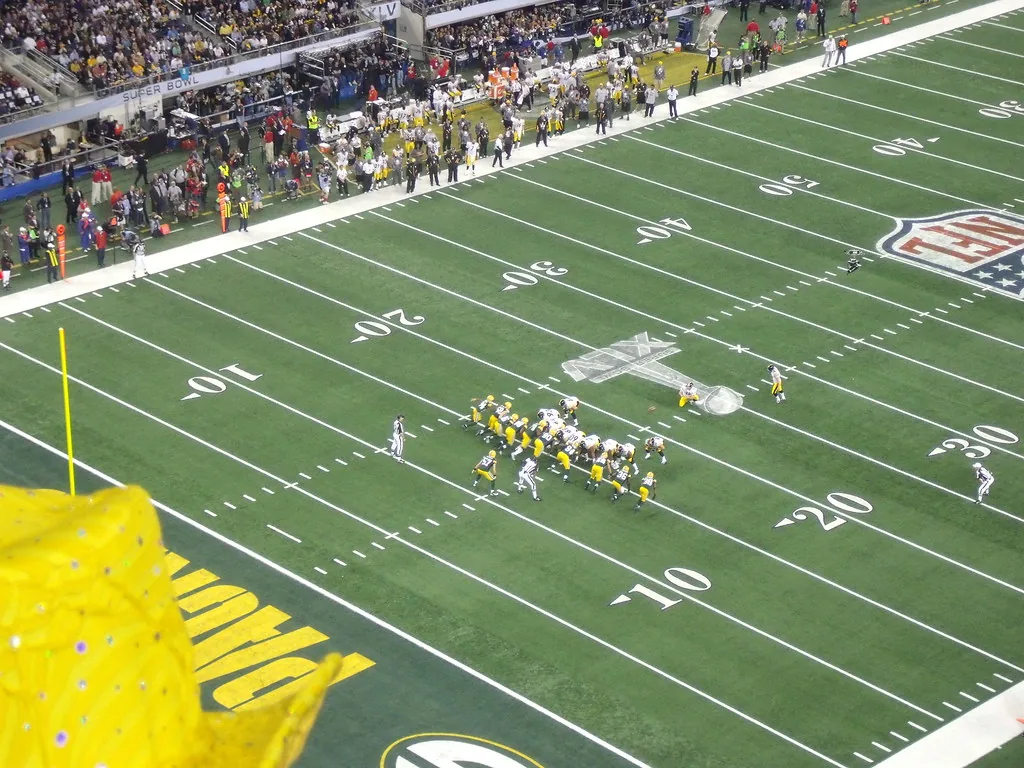
    Super Bowl logo painted on football field turf
    Super Bowl logo painted on football field turf

    Recent Form Check: The Rams Game on August 15

    If you’re wondering whether the 69-yard kick was a fluke or part of a pattern, the game a week earlier is the relevant data point.

    On August 15, 2026, against the Los Angeles Rams, Butker went 3-for-3 on field goals: one from 59 yards, and two from under 40 yards. No misses that night.

    Coverage after the Rams game — notably a Yahoo Sports piece on his performance that day — framed it as Butker looking like himself again, and floated that he’d been working back from an injury. The specific injury, what it was and when it happened, isn’t confirmed in the reporting reviewed here. Treat that part as industry chatter, not a confirmed fact, until a team or player statement says otherwise.

    2 games, 2 long makes over 59 yards, zero misses in the first and 3 misses total (extra point plus one field goal) in the second. That’s the actual form line, not just the highlight distance.

    Kansas City Chiefs stadium exterior
    Kansas City Chiefs stadium exterior

    The Catch: What “Doesn’t Count” Actually Means

    “Unofficial” gets flattened in headlines. Here’s what it actually covers:

    • The kick happened. Nobody disputes that Butker made a 69-yard field goal.
    • Team and stadium history count it: Arrowhead’s record and the Chiefs’ franchise record both reflect the 69-yard kick, per game coverage.
    • The NFL’s all-time record book doesn’t count it — that distinction is reserved for regular-season and playoff games.
    • The final score carried no playoff stakes either way — preseason games don’t affect seeding, and the Chiefs lost by 1 point regardless.
    • Reporting on the exact date is inconsistent. CBS Sports references Saturday, August 22; other coverage timestamps the story August 23, which is likely a time-zone artifact of when each outlet published rather than a real dispute about game day. We’re flagging the discrepancy rather than picking a side.
    • One outlet’s headline, from Fox Sports, printed “68-Yard” while its own article body said 69 yards — almost certainly a typo, but a reminder to check the body text, not just headlines, on stats like this.
    American football flying through goal posts
    American football flying through goal posts

    FAQ

    Is Harrison Butker’s 69-yard field goal an NFL record? No. It happened in a preseason game, and the NFL doesn’t count preseason stats as official records. The current official record is 68 yards, set by Cam Little in a regular-season game.

    Who holds the actual NFL record for longest field goal? Cam Little of the Jacksonville Jaguars, at 68 yards, kicked November 2, 2025, against the Las Vegas Raiders. He broke Justin Tucker’s 66-yard record from September 26, 2021.

    Did the Chiefs win the game where Butker kicked 69 yards? No. The Buccaneers won 16-15. Butker missed a 43-yard field goal and an extra point later in the same game.

    What is Harrison Butker’s longest field goal in a game that counts? Based on the sourcing here, his most notable officially-recognized long kick is the 57-yard field goal in Super Bowl LVIII on February 12, 2024, which is a Super Bowl record — Super Bowls are playoff games and do count toward records.

    What’s Still Unclear

    Four loose threads remain. The exact date of the Bucs game is reported as both August 22 and August 23 depending on the outlet, and the actual local kickoff date isn’t confirmed here. The nature and timing of Butker’s earlier injury, referenced only in passing around the Rams game, isn’t specified anywhere verifiable. A claim floating around that only three kickers in NFL history have ever hit 69 yards or more wasn’t traceable to a confirmed source, so it’s left out here entirely. A separate claim that Cam Little hit a 70-yard field goal in the 2025 preseason also isn’t backed by any source reviewed for this piece, so it’s excluded from the distance comparison above rather than reported as fact. If official confirmation surfaces on any of this, it would change the footnotes, not the core numbers above.

    Sources

    1. Yahoo Sports — “Harrison Butker makes a 69-yard FG on final play of first half,” published August 23, 2026
    2. NFL.com — “Can’t-Miss Play: 69-yard field goal! Harrison Butker goes long distance vs. Bucs,” August 22–23, 2026
    3. Yahoo Sports — “Harrison Butker Proved He’s Still Kansas City’s Kicker With Performance vs. Rams Today,” August 15, 2026
    4. CBS Sports — “Chiefs’ Harrison Butker drills historical 69-yard field goal, but it won’t count in the NFL record book,” August 22–23, 2026
    5. Yahoo Sports — “Chiefs’ Harrison Butker kicks 69-yard field goal, later misses PAT in KC’s 1-point preseason loss vs. Bucs,” August 23, 2026
    6. Fox Sports — “Chiefs’ Harrison Butker Nails 68-Yard Field Goal Against Buccaneers” (headline discrepancy noted above), August 22–23, 2026
    7. ESPN — “Jaguars’ Cam Little sets NFL record with 68-yard field goal,” November 2–3, 2025
    8. CBS Sports — “Chiefs’ Harrison Butker smashes longest field goal in Super Bowl history, breaks two records with one kick,” February 12, 2024

    Image credits

    1. Goal Post by compujeramey, licensed under BY (via Openverse)
    2. Beyond the Gridiron: Army Reserve engages fans, cadets, community in Florida Classic by US Army Reserve, licensed under BY (via Openverse)
    3. Serbia 1 Slovenia 1 by Jeff Attaway, licensed under BY (via Openverse)
    4. Field goal attempt by JohnSeb, licensed under BY (via Openverse)
    5. Warren G. Harding High School, Warren, Ohio – ‘Classic Facade’ by Jack W. Pearce, licensed under BY-SA (via Openverse)
    6. Low clouds over the English Channel by NASA Goddard Photo and Video, licensed under BY (via Openverse)
  • Gamescom Opening Night Live 2026: Start Times & How to Watch

    Gamescom Opening Night Live 2026: Start Times & How to Watch

    Contents

    Gamescom Opening Night Live 2026 streams free on YouTube and Twitch on Tuesday, August 25, running roughly two hours with Geoff Keighley hosting. In Tokyo and Seoul, that means setting an alarm for 3 a.m. Wednesday. Below: the exact start time across all eight relevant zones, and which of the rumored games are actually backed by more than one outlet.

    gamescom cologne koelnmesse convention hall exterior
    gamescom cologne koelnmesse convention hall exterior

    Gamescom Opening Night Live 2026: The Short Answer

    The show broadcasts live from Cologne, Germany, though almost everyone watching does so online. No ticket, no account — it streams openly on YouTube and Twitch. It’s a scripted showcase, not a camera pointed at the show floor.

    Runtime lands around two hours, according to four separate outlets. A preshow starts roughly 30 minutes before the main broadcast.

    Start Times, Converted For Every Time Zone

    Most coverage stops at Pacific and Eastern time. Here’s the full conversion across all eight zones, including the three that land on August 26 local time.

    Time ZoneLocal Start TimeLocal Date
    Pacific (PT)11:00 amAug 25
    Central (CT)1:00 pmAug 25
    Eastern (ET)2:00 pmAug 25
    British (BST)7:00 pmAug 25
    Central European (CEST)8:00 pmAug 25
    Japan / Korea (JST/KST)3:00 amAug 26
    Australian Eastern (AEST)4:00 amAug 26
    New Zealand (NZST)6:00 amAug 26

    Four zones watch it Tuesday evening or afternoon. Three watch it before sunrise Wednesday. That’s an eight-hour spread across the day depending on where you live — plan around it.

    One outlet lists a specific preshow clock time — 1:15 pm ET — instead of just “30 minutes before.” The math checks out: 1:15 pm ET sits exactly 30 minutes ahead of the 2:00 pm ET main show, same fact stated two ways.

    twitch and youtube app icons on smartphone screen
    twitch and youtube app icons on smartphone screen

    How to Watch — And What It Costs

    Nothing. There’s no catch, no fine print about a paid tier — just a free stream.

    • Free on YouTube and Twitch, no subscription or account needed.
    • No paywall, per games.gg’s explicit language.
    • No ticket required to watch remotely.
    • Gamescom’s own official site also carries the broadcast, per one outlet.
    • Engadget runs a companion live blog for readers who’d rather read than watch.
    • The channel behind this broadcast also runs The Game Awards, according to games.gg.

    If you’re attending in person at Koelnmesse in Cologne, ticket and floor-access details weren’t published in any of the five outlets checked for this piece. Two of them flagged the same gap, so it’s not something we missed — the information just isn’t out yet.

    Who’s Hosting

    Geoff Keighley hosts. He’s the same person behind The Game Awards and Summer Game Fest, and three separate outlets describe him that way — as solid a confirmation as this piece gets.

    A co-host name, Eefje Depoortere, turned up in one search result but didn’t appear in any of the five fully-read articles for this piece. It’s unverified — worth flagging rather than dropping, since it may well be accurate, but a single unchecked snippet isn’t enough to print as fact.

    The Games Confirmed So Far

    Coverage varies by outlet, and no two lists match exactly. Five games below showed up in at least two outlets; ten more were mentioned by only one and are labeled accordingly.

    Confirmed by multiple outlets:

    • Final Fantasy VII Revelation — director Naoki Hamaguchi appears live; this is the first update since its Summer Game Fest reveal.
    • Gears of War: E-Day — new story trailer.
    • The Witcher 3: Wild Hunt — “Songs of the Past” expansion, first reveal.
    • Game of Thrones: War for Westeros.
    • METRO 2039.

    Reported by a single source each (not cross-checked elsewhere):

    • Silent Hill: Townfall — latest look.
    • AION 2.
    • Tides of Annihilation.
    • Project Bonfire.
    • Cinder City.
    • Valor Mortis.
    • Pony Island 2.
    • Path of Exile 2.
    • Monster Hunter Outlanders.
    • A new, unnamed Paradox Interactive strategy title.

    Separately, a release-date announcement for The Duskbloods is described as “possible” — not confirmed — by the outlet that mentioned it.

    final fantasy vii revelation key art poster
    final fantasy vii revelation key art poster

    The Games List That Nobody Can Fully Confirm

    Cross-referencing four outlets’ game lists, none line up completely. Some name Final Fantasy VII Revelation, Gears of War: E-Day, Silent Hill: Townfall and Songs of the Past. Others swap in AION 2, Tides of Annihilation, Game of Thrones: War for Westeros, Project Bonfire, Cinder City and METRO 2039. No single outlet lists everything above in one place.

    That doesn’t mean the games aren’t in the show. It means each title is only as solid as its own citation, and a few sites that might have cross-checked the list — including at least one other outlet attempted during research for this piece — were unreachable.

    There’s also a murkier claim: one outlet lists Modern Warfare 4, 007 First Light, Metaphor: ReFantazio and Nintendo Switch Sports Resort as Nintendo Switch 2 titles tied to the event. But that outlet frames them as hands-on show-floor demos, not confirmed Opening Night Live broadcast segments — two different things. Floor demos at Gamescom don’t automatically mean stage time on the livestream, and nothing in the sourcing settles which one applies here.

    WhatConfidence
    Date, start times, runtimeConfirmed — matches across 4 sources
    Free stream on YouTube/TwitchConfirmed — explicit, no paywall language
    Geoff Keighley as hostConfirmed — named in 3 sources
    Co-host name, full game list, ticket infoUnconfirmed or single-sourced

    Table above is the short version. Treat the top two rows as safe to plan around. Treat the bottom row as things to verify closer to the date.

    What Other Coverage Leaves Out

    Three things, specifically.

    First: the timezone table. Search results are full of “check your local time” links that dump you into a converter widget instead of just printing the numbers. We printed them above.

    Second: nobody flags that the Switch 2 titles might be floor-only. It reads as a broadcast lineup in the one place it’s mentioned, but the framing in that same outlet says “hands-on,” which is a show-floor term, not a stage term.

    Third: the surrounding schedule. Gamescom week isn’t just one show. One source lists an Xbox broadcast on August 26 and 27 at 4:00 pm CEST, a Future Games Show on August 26 at 1:00 pm ET, and an event called Awesome Indies on August 27 at 2:00 pm ET. None of that was cross-verified elsewhere, so hold it loosely — but if you’re clearing your calendar for Gamescom week, Opening Night Live is not the only appointment.

    esports arena stage with large led screen
    esports arena stage with large led screen

    FAQ

    Is Gamescom Opening Night Live 2026 free to watch? Yes. It streams free on YouTube and Twitch. No subscription, no ticket, no paywall — that’s stated explicitly by at least one outlet and implied by every other outlet’s silence on cost.

    What time does the preshow start? About 30 minutes before the 2:00 pm ET main broadcast, which works out to roughly 1:15 pm ET — one outlet gives that exact clock time.

    How long is the show? Around two hours, consistent across four sources.

    Who is co-hosting with Geoff Keighley? Unconfirmed. A name surfaced in search results but wasn’t verified in any fully-read article.

    Will Nintendo Switch 2 games appear during the broadcast? Unclear. Titles like Modern Warfare 4 and Metaphor: ReFantazio are tied to Switch 2 hands-on demos at the event, but it’s not confirmed that they’re part of the Opening Night Live stage show itself.

    gaming convention crowd hands-on demo booths
    gaming convention crowd hands-on demo booths

    What’s Still Unknown

    Four things remain open as of this writing: the identity of any co-host beyond Keighley, whether in-person tickets exist or what they’d require, the complete and final games list, and whether the Switch 2 titles mentioned by one outlet will actually appear on stage or only on the show floor. None of the five outlets checked here resolve those questions. If you need certainty on any of them, wait for Gamescom’s own press materials closer to August 25, 2026, rather than trusting any single preview article — including this one.

    Sources

    1. Insider Gaming — Gamescom Opening Night Live 2026 — Date, Start Times & How To Watch — https://insider-gaming.com/gamescom-opening-night-live-2026-date-start-times-how-to-watch/
    2. Engadget — How to watch Gamescom’s Opening Night Live showcase — https://www.engadget.com/2241085/how-to-watch-gamescom-opening-night-live-showcase/
    3. GamerFuzion — Gamescom 2026 Schedule: Every Showcase, Date and Start Time — https://www.gamerfuzion.com/gamescom-2026-schedule/
    4. games.gg — Gamescom 2026 Opening Night Live: Date, Time & How to Watch — https://games.gg/news/gamescom-2026-opening-night-live-watch/
    5. player.gg — Gamescom Opening Night Live 2026 — https://player.gg/events/gamescom-opening-night-live-2026

    Image credits

    1. Monday Sessions, Gunnar Lott of IDG by Official GDC, licensed under BY (via Openverse)
    2. Session: Bringing Home the Bacon- Developing the VFX of Spec Ops: The Line as Thin Slices by Official GDC, licensed under BY (via Openverse)
    3. Gamescom 09 – 06 by Shigeako, licensed under BY-ND (via Openverse)
    4. HM3_4919 by Web Summit, licensed under BY (via Openverse)
    5. Show at Konami’s Booth by włodi, licensed under BY-SA (via Openverse)

  • Pixel 11 Pro XL Review: Worth the $100 Price Hike in 2026?

    Contents

    Pay $100 more, get 4GB less base RAM: that’s the trade on Google’s Pixel 11 Pro XL, which launched August 12, 2026 at $1,299 for the 256GB model — the 128GB tier is gone. Early reviews from TechCrunch and Gizmodo agree the camera got faster, but both call the overall upgrade iterative rather than dramatic. The chip’s manufacturing process is reported two different ways depending on the source, and nobody has confirmed a Korean release date or price.

    That last part — no Korean date or price — matters if you’re reading this from outside the US. More on that below.

    Release Date and Price: What You’ll Actually Pay

    Google announced the Pixel 11 Pro XL on August 12, 2026. Where the confusion starts is the actual sale date. GSMArena’s spec database lists the release as August 20, 2026. Droid-Life, writing the day before the announcement, treats August 12 as both the reveal date and the start of sales, with preorders opening at 7 a.m. Pacific that morning. Neither source resolves the gap. If you’re trying to pin down exactly when general retail availability began, treat it as unconfirmed.

    Pricing is clearer.

    StoragePrice (US)RAM
    256GB$1,29912GB
    512GB$1,41916GB
    1TB$1,64916GB

    GSMArena lists the 256GB configuration at $1,299 / €1,399 / £1,279. Every storage tier costs $100 more than the equivalent Pixel 10 Pro XL configuration did. The 128GB option is discontinued — 256GB is now the entry point. Four colors ship: Olive, Canyon, Fog, and Obsidian.

    No Korean price. No Korean date.

    Every source I could find covers US, EU, or UK pricing only. If you’re waiting on a domestic Korea launch, none of the five outlets reviewed here mention one.

    Full Specs: Pixel 11 Pro XL

    ![google pixel 11 pro xl olive colorway back panel](IMAGE_1)

    Here’s the full spec sheet, pulled from GSMArena and Droid-Life:

    • Display: 6.8-inch OLED, 1344×2992 resolution, 1–120Hz LTPO
    • Brightness: GSMArena lists 3,600 nits peak / 2,400 nits HBM; Droid-Life lists 2,450 nits — the two don’t match, and I can’t confirm which is right
    • Chipset: Google Tensor G6, process node reported as both 2nm and 3nm depending on the source
    • RAM/storage: 12GB RAM on the 256GB model, 16GB RAM on both 512GB and 1TB
    • Main camera: 50MP, f/1.7, 25mm equivalent, 1/1.3-inch sensor
    • Ultrawide: 48MP, f/1.7, 123° field of view
    • Telephoto: 48MP, f/2.8, 106mm equivalent, 5x optical zoom, periscope design
    • Selfie camera: 42MP
    • Battery: 5,115mAh
    • Charging: 45W wired, 25W wireless
    • Dimensions: 162.7 × 76.5 × 8.5mm, 226g
    • Modem: MediaTek M90, replacing the Samsung Exynos modem used previously

    ![pixel 11 pro xl periscope telephoto lens macro](IMAGE_2)

    Two numbers on that list conflict with each other across sources, and neither GSMArena nor Droid-Life explains why. Treat the brightness figures and the process-node claim as open questions, not settled facts.

    What Changed From the Pixel 10 Pro XL

    ![pixel 10 pro xl vs pixel 11 pro xl side by side comparison](IMAGE_3)

    This is the comparison most launch coverage skips. Here’s what actually moved between generations:

    SpecPixel 10 Pro XLPixel 11 Pro XL
    Starting price$1,199 (256GB)$1,299 (256GB)
    Base RAM (256GB tier)16GB12GB
    Storage floor128GB256GB
    ModemSamsung ExynosMediaTek M90
    Zoom (digital, cited)100x120x

    Beyond the table:

    • Both the main and telephoto camera sensors were replaced with physically larger sensors
    • Digital zoom is cited at up to 120x, up from 100x — the optical zoom itself stays at 5x
    • Base RAM on the entry storage tier fell from 16GB to 12GB
    • The rear temperature sensor was removed
    • The camera bar was redesigned into a fully black housing
    • 128GB storage was discontinued
    • A new “HiLight” feature turns the camera flash into a multicolor notification light, but it only works for phone calls and Gemini — not text messages
    • PhoneArena’s review headline, per search snippets, reads “Pixel 11 Pro XL is mostly the same phone as the 10 Pro XL, but pricier” — a blunt summary of the gap between price and change

    A $100 price increase paired with 4GB less memory on the base model isn’t a typical generational trade.

    Camera: What the Reviews Actually Found

    TechCrunch describes the camera as “snappier” with more customization options than before. Gizmodo backs that up, calling Night Sight up to 4.5 times faster than on the Pixel 10 Pro. Two new software features show up across both reviews:

    • Magic Capture, which pulls a 12MP still image out of a video clip
    • Looks, a set of 10 filter styles including Original, Natural, and Editorial

    TechCrunch’s overall camera read: “camera app and capture feel snappy.” Gizmodo’s is similarly positive — “cameras on the Pixel 11 Pro and 11 Pro XL are solid.” Neither is glowing praise. Both are plain confirmations that the camera works well.

    The catch: Magic Capture struggles with moving subjects, according to TechCrunch. Pulling a clean still from a video of something in motion doesn’t work as reliably as pulling one from a static scene.

    Search snippets from other outlets add detail I can’t verify against full reviews: a 1/1.3-inch main sensor, roughly 30% more light reaching the telephoto lens, and autofocus newly added to the ultrawide camera. I’m flagging these as unconfirmed because I couldn’t get past a 403 error on the original pages — treat them as directionally likely, not settled.

    Tensor G6: The Performance Question

    ![google tensor g6 chip die shot](IMAGE_4)

    This is where the reviews get less kind. Gizmodo says Tensor G6’s performance “doesn’t compare” to Apple’s A19 Pro, and reports frame drops during gaming with no improvement in 3D game performance over the previous generation. Android 17 also showed slight lag during image loading and multitasking in Gizmodo’s testing.

    Search snippets attributed to Google claim Tensor G6 is about 20% faster and 20% more power-efficient than Tensor G5, with the TPU processing Gemini commands up to 50% faster. Those numbers, if accurate, read like vendor marketing figures rather than independent benchmark results — none of the reviews I could fully read reproduce them with their own testing. One more data point from search snippets, attributed to a Tom’s Guide review I couldn’t fetch in full: “raw performance power is just as weak as ever.” I can’t confirm that quote against the original article, so treat it as unverified.

    The process node itself is disputed. GSMArena’s spec listing says 3nm. Other sources describe it as a 2nm TSMC process. Nobody I read explains the discrepancy.

    AI Features and the Automation Problem

    ![pixel 11 pro xl display 6.8 inch oled screen on](IMAGE_5)

    The AI feature list is long:

    • Quick Share, now AirDrop-compatible
    • Magic Cue, a suggestion engine
    • Sign-to-Text
    • Live Translate

    Gizmodo ran a concrete test that’s more useful than any feature list: asking the assistant to automate a Walmart grocery order. The automated version took 2 minutes 39 seconds. Doing it manually took 1 minute 30 seconds. The AI was slower than a human doing the same task by hand.

    That’s the pattern across Gizmodo’s AI testing — a “work in progress” verdict, with users needing to double-check outputs rather than trust them outright.

    ![pixel 11 pro xl hilight camera flash led notification glow](IMAGE_7)

    HiLight, the flash-as-notification-light feature mentioned above, draws criticism from both TechCrunch and Gizmodo. Both call it limited, since it only lights up for calls and Gemini interactions. Text messages don’t trigger it. One reviewer used the word “pointless.”

    It’s a feature that sounds useful in a spec sheet and falls apart the moment you try to use it for the thing most people actually want a blinking light for — texts.

    Battery and Charging: The Numbers Don’t Agree

    ![pixel 11 pro xl usb-c charging port 45w cable](IMAGE_6)

    GSMArena and Droid-Life both list a 5,115mAh battery, with 45W wired and 25W wireless charging. Gizmodo’s real-world verdict is “all-day battery life” — a phrase, not a number. No hour-and-minute figure appears anywhere in the reviews I could fully read.

    Search snippets complicate this further, claiming the battery actually shrank — from 5,200mAh on the previous generation down to somewhere between 5,000mAh and 5,115mAh — and that charging is “somehow slower.” That directly conflicts with the 45W wired spec listed by GSMArena. I couldn’t get past the paywall or fetch error to check the original source, so this stays unconfirmed.

    TechCrunch’s review doesn’t mention battery life at all. None of the three battery claims agree, and none comes with a clean number.

    The Catch — What Other Reviews Skip

    ![pixel 11 pro xl camera bar closeup black housing](IMAGE_8)

    A few things most coverage skips:

    • No Korean release date or price exists in any of the five sources reviewed here. If you’re searching for one, it hasn’t been reported yet.
    • No fold model — “Pixel 11 Pro Fold” or similar — appears anywhere in these five sources, despite search interest in the term. Don’t take that as confirmation one doesn’t exist; it just means it wasn’t covered in what I read.
    • No Pixel 11a information appears in any source used for this piece.
    • Three other reviews — Tom’s Guide, PhoneArena, and Android Central — could only be checked through search snippets. Full-text fetches returned 403 errors or truncated content. Their star ratings, battery test results, and benchmark scores are not verified here.
    • TechCrunch’s own review carries no numeric star rating at all — just prose judgment.

    That gap matters more than it sounds, because plenty of “best phone” roundups will cite a star rating from one of those three unread reviews as if it’s settled — and I can’t confirm those numbers exist in the form they’re being cited.

    There’s a pattern in what did get confirmed, too. Every hardware number that changed for the worse — RAM on the base tier, the battery capacity claims in the snippets, the process-node confusion — sits next to a number that changed for the better, like the larger camera sensors or the faster Night Sight. Neither TechCrunch nor Gizmodo frames this as a wash. Both frame it as a phone that’s fine, not one that justifies $100 more than what it replaced.

    FAQ

    When did the Pixel 11 Pro XL launch, and is it available in Korea? Google announced it August 12, 2026. GSMArena lists the release date as August 20, 2026, while Droid-Life treats August 12 as the launch date too, with preorders starting that morning. No Korean release date or price has been reported in the sources checked for this article.

    Is the Pixel 11 Pro XL a big upgrade over the Pixel 10 Pro XL? Not according to the reviews. TechCrunch calls the upgrades “iterative” and says they “may not be enough to tempt recent Pixel owners.” The base model’s RAM actually dropped, from 16GB to 12GB, while the price rose by $100 across every storage tier.

    Is Tensor G6 built on a 2nm or 3nm process? Sources disagree. GSMArena’s spec listing says 3nm. Other reporting describes a 2nm TSMC process. No review resolves the conflict, so treat it as unconfirmed.

    Battery life in hours, the exact general-sale date, Korean pricing, any fold or “11a” variant, and the real numbers behind three of the five reviews used for launch coverage — none of that is confirmed yet.

    Sources

    1. TechCrunch — “Pixel 11 Pro XL review: Snappier cameras can’t hide an iterative upgrade,” Ivan Mehta, published 2026-08-22 — https://techcrunch.com/2026/08/22/pixel-11-pro-xl-review-snappier-cameras-cant-hide-an-iterative-upgrade/
    2. Gizmodo — “Google Pixel 11 Pro and 11 Pro XL Review: Still Growing Into Their AI Shoes,” Raymond Wong, updated 2026-08-21 — https://gizmodo.com/google-pixel-11-pro-review-2000800535
    3. GSMArena — “Google Pixel 11 Pro XL – Full phone specifications” — https://m.gsmarena.com/google_pixel_11_pro_xl-ampp-14800.php
    4. Droid-Life — “Pixel 11 Series: Everything We Know About Google’s New Phones,” Kellen, published 2026-08-11 — https://www.droid-life.com/2026/08/11/pixel-11-series-everything-we-know-about-googles-new-phones/
    5. Search snippets only (full text unavailable, 403/truncation errors): Tom’s Guide, PhoneArena, and Android Central reviews of the Pixel 11 Pro and Pro XL — cited only where explicitly marked “snippet” above, not independently verified.
  • Instagram AI Data Opt-Out 2026: What Actually Works

    Instagram AI Data Opt-Out 2026: What Actually Works

    Contents

    Meta will review an objection to using your Instagram data for AI training. Reviewing isn’t approving — and even an approved objection only stops future use; nothing already folded into a training run comes back out. What follows is the fine print other write-ups on this topic tend to skip: which menu holds which switch, and which country’s opt-out actually has teeth.

    The Short Answer

    Meta has used public posts from adult users to train its AI since 2007. That part isn’t new.

    What changed in June 2026 is the paperwork: a setting called “Activity from other businesses” now governs how your data feeds AI-driven ad targeting, while a separate Privacy Center form lets you formally object to the training itself. They’re 2 different switches, and flipping one doesn’t touch the other.

    The toggle people actually care about sits somewhere else: under “Sharing and reuse,” it controls whether someone can generate an AI image of your face using your handle — without notifying you. It’s not easy to find.

    Since December 16, 2025, Meta has also used your conversations with Meta AI as a signal for ad personalization. That’s a separate stream from the training question, and it’s easy to miss.

    What Meta’s AI Actually Trains On

    Before touching any setting, it’s worth knowing what’s actually being fed into the model. Meta’s own disclosures put 3 categories in scope:

    • Posts you’ve shared publicly
    • Photos, including their captions
    • Comments you’ve left

    Direct messages are excluded, unless you’ve shared them yourself with Meta AI inside a chat. So the exposure here is mostly about what you’ve posted publicly, not what you’ve said in private.

    One thing you can’t control: photos other people post of you. If a friend tags you in a picture, that image sits under their privacy settings, not yours.

    Data already folded into an existing training run can’t be pulled back out afterward. Opting out stops future use — it doesn’t undo past use.

    instagram privacy center generative ai section screenshot
    instagram privacy center generative ai section screenshot

    Turning Off AI Ad Targeting, Step by Step

    This setting is the easiest of the bunch to find. On iPhone:

    1. Open the Instagram app
    2. Tap your profile, then the 3-line menu in the top right
    3. Go to Accounts Center
    4. Select “Activity from other businesses”

    Simple enough. Except it isn’t always in that spot.

    On other accounts, the same control shows up under a different label instead: Ad preferences → Ad settings → Activity information from ad partners. Same function, different path. None of the 5 sources checked for this piece flag that split — so if you go looking for a menu item that doesn’t exist on your account, you might assume the feature was removed. It wasn’t. It’s just filed elsewhere.

    If you’re in the EU, there’s an extra lever: Ad preferences → Ad settings → Ad experience, where you can select “less-personalized ads” — a regional option not confirmed to exist for US or Asia-Pacific accounts.

    One more thing that comes up in comment sections: Meta states, officially, that it does not use your phone’s microphone to listen to conversations for ad targeting. Treat that as an official claim, not a verified one — no source here tested it.

    instagram accounts center activity from other businesses toggle
    instagram accounts center activity from other businesses toggle

    Phone-Level Permissions Worth Checking

    Instagram’s in-app settings are one layer. Your phone’s own permission system is another, and it’s worth a separate pass.

    On iPhone:

    • Settings → Privacy & Security → Tracking
    • Find Instagram in the list
    • Toggle tracking off

    On Android:

    • Settings → Apps → Instagram
    • Tap Permissions
    • Adjust individually (location, contacts, microphone, and so on)
    iphone settings privacy tracking toggle screen
    iphone settings privacy tracking toggle screen

    Neither of these stops Meta from using content you’ve already posted publicly. They limit tracking and cross-app data collection. Different problem, different fix — don’t confuse the two.

    Filing a Formal Objection to AI Training

    Ad targeting is the easy fix. Training is the one buried deepest, and this is the step that actually addresses it.

    The current path:

    1. Go to your profile, tap the menu (≡)
    2. Select “More info and support”
    3. Open Privacy Center → Privacy topics
    4. Find the “Generative AI” section and tap “Get started”

    Or skip the app entirely and go straight to privacycenter.instagram.com.

    From there: choose “Information that you’ve shared on Meta products,” enter your email address, and submit. Total time, according to one source that timed it: about 5 minutes.

    There’s an alternate route described elsewhere — Settings & Privacy → Privacy Center → “Right to Object” form, where you enter an email and a reason for the objection before submitting. Whether this is a separate form or the same one under a different label isn’t fully clear across sources. If one path doesn’t work, try the other.

    For context: in 2024, UK users were pointed to this through a notification inside the Facebook or Instagram app itself — an “object” link that opened a short form. Email required, explanation optional.

    Meta’s own stated position, quoted directly: if an objection is approved, the company will not use your public Facebook or Instagram information “to develop or improve generative AI models” going forward.

    That phrase — “going forward” — is the entire limit of this opt-out, in 3 words.

    privacycenter instagram website form on laptop screen
    privacycenter instagram website form on laptop screen

    Regional Differences: Where This Actually Works

    This table decides whether anything above actually applies to you: it lays out where each country stands.

    RegionLegal basisWhat happens
    EU / UKGDPR-based formal opt-out rightsHigh likelihood of approval
    United StatesNo federal privacy law requiring itObjection can be filed, approval not guaranteed
    IndiaNo enforceable opt-out right in placeLimited, effectively unavailable
    South KoreaNot addressed in any source reviewedUnconfirmed

    The EU and UK situation is the strongest, because it’s backed by law, not by Meta’s goodwill. The US situation is the opposite: you can submit the form, but nothing legally requires Meta to honor it, and none of the 5 sources reviewed here give an approval rate or a processing timeframe.

    South Korea isn’t mentioned in any of the 5 sources used for this piece. Not “opt-out unavailable” — just absent. If you’re in Korea looking for a definitive answer, none of the current coverage gives you one.

    What Opting Out Doesn’t Do

    Here’s what an approved objection actually changes — and what it doesn’t.

    • The process is not automatic. Meta reviews and approves objections; it isn’t a switch that instantly takes effect.
    • Meta’s operating assumption, as reported, is that public data is fair game for AI training by default — objection is the exception you have to actively request, not a baseline right you start with.
    • Even where it works, it doesn’t work for everyone or block everything. One source describes it plainly: opting out “cannot fully block” AI use of your data.
    • The process itself is still described as cumbersome — 2 years after it first launched in 2024.
    • There’s a structural criticism worth repeating: under GDPR, sensitive personal data is generally supposed to require opt-in consent, not opt-out objection. Critics have flagged that Meta’s approach here runs the opposite direction — you’re in by default, and objecting is on you.

    None of the sources reviewed give a number for how many objections get approved, or how long approval takes. If that data exists, Meta hasn’t published it anywhere these 5 sources found.

    Stopping AI-Generated Images of You

    Of everything in this guide, this toggle carries the sharpest real-world consequence — and it has nothing to do with ads.

    The path: Instagram profile → menu → “Sharing and reuse” → find the section labeled “Allow people to reuse your content on Instagram and with AI features at Meta” → turn off the toggles for both Posts and Reels.

    Here’s why it matters. Leave that toggle on, and anyone can tag your Instagram handle to generate an AI image using your likeness — and you won’t be notified when it happens. That’s not a hypothetical risk. It’s the direct mechanism behind identity misuse, phishing setups, and fabricated images circulating without your knowledge.

    This isn’t an abstract concern, either. In July 2026, Meta’s “Muse Image” feature reportedly let Meta AI generate images referencing public Instagram accounts, and Meta pulled the feature soon after amid criticism — though the exact shutdown date and Meta’s internal explanation for it aren’t confirmed by the sources checked for this piece.

    The fix for that specific feature was Meta removing it — not a setting you controlled. The “Sharing and reuse” toggle is a separate, ongoing control; check it regardless of whether Muse Image ever affected you.

    instagram sharing and reuse settings toggle menu
    instagram sharing and reuse settings toggle menu

    Things No Source Confirms Yet

    These search terms show up again and again around this topic, and it’s worth being direct: none of the 5 sources checked for this piece address them.

    • Whether Instagram labels AI-generated content or AI-run accounts with a visible tag — unconfirmed
    • Whether there’s a dedicated “AI creator” account category — unconfirmed
    • Whether Instagram has banned any category of AI use outright — unconfirmed
    • Background details on how Instagram’s AI systems are built or trained beyond what’s listed above — unconfirmed
    • An exact deadline for filing an AI-training objection — not specified in any source, including the original TechCrunch coverage of the UK process

    If you’ve seen a claim about any of these presented as fact elsewhere, treat it skeptically until it points to a primary source.

    meta ai chat interface reset command smartphone
    meta ai chat interface reset command smartphone

    Managing Meta AI Chat History

    2 commands handle this directly, typed straight into a Meta AI conversation:

    • /reset-ai — deletes a specific AI conversation
    • /reset-all-ais — deletes all AI conversations at once

    Neither of these is documented as retroactively removing anything already used for training. They clear the chat log going forward, which is a privacy control, not a training opt-out.

    smartphone AI chatbot conversation delete option
    smartphone AI chatbot conversation delete option

    FAQ

    Does turning off “Activity from other businesses” stop Instagram from training AI on my posts? No. That setting controls ad targeting signals. Stopping AI training use requires the separate Privacy Center objection process described above.

    If Meta approves my objection, does it delete data already used? No. Sources describe the block as forward-looking only. Data already folded into an existing training run isn’t pulled back out.

    Is the opt-out guaranteed to work if I file it? Only where it’s backed by law. In the EU and UK, GDPR gives you a formal right, and approval is likely. In the US, you can file the same form, but nothing requires Meta to approve it, and no source here gives an approval rate.

    What’s Still Unknown

    Whether Korea has any opt-out right at all, and what legal basis it would rest on, isn’t addressed anywhere in the 5 sources used here. There’s no published deadline for filing an AI-training objection, and nobody has published an approval rate or a processing-time figure for these forms.

    Whether “Activity from other businesses” has rolled out identically across every region — as opposed to the alternate “Ad preferences” layout other accounts still show — isn’t confirmed either. If Meta has published harder numbers on any of this since these sources went live, that hasn’t surfaced yet.

    Sources:

    1. Engadget, “How to limit Instagram from using your data for AI and ads,” published 2026-08-22
    2. TechCrunch, “Hey UK, here’s how to opt out of Meta using your Facebook and Instagram data to train its AI,” published 2024-10-03
    3. Malwarebytes, “Turn off this Meta setting before someone generates AI images of you,” published 2026-07-09
    4. DeleteMe, “How to Opt Out of Instagram AI Training,” published 2026-06-16
    5. Izoate, “How to Opt Out of Meta AI Training (2026): Stop Meta Using Your Data,” published 2026-04-02

    Image credits

    1. Caption This Week 7 (9/12 Thru 9/16) by NASA Goddard Photo and Video, licensed under BY (via Openverse)

    2. ‘Honeycombs’ and Hexacopters Help Tell Story of Mars by NASA Goddard Space Flight Center, licensed under BY (via Openverse)

    3. Caption This Week 8 (9/19 Thru 9/23) by NASA Goddard Photo and Video, licensed under BY (via Openverse)

    4. Caption This Week 2 (8/8 thru 8/12) by NASA Goddard Photo and Video, licensed under BY (via Openverse)

    5. Coelioxys afra, f, right, J Smit, Netherlands_2021-11-23-15.30.28 ZS PMax UDR copy by Sam Droege, licensed under PDM (via Openverse)
    6. Caption This Week 4 (8/22 thru 8/26) by NASA Goddard Photo and Video, licensed under BY (via Openverse)
    7. Caption This Week 6 (9/5 thru 9/9) by NASA Goddard Photo and Video, licensed under BY (via Openverse)