Contents
- So is self-hosting actually cheaper? The number nobody runs
- What Google Photos costs today — and why other write-ups disagree on it
- What Immich itself costs
- The hardware price shock nobody priced into the "cheap NAS" math
- Why you can't skip Backblaze B2 — an Immich box alone isn't a backup
- The full math: Google vs. self-hosted, five years out
- Where the crossover point moves
- FAQ
A Backblaze B2 backup of a 2TB photo library runs $13.90 a month. Google’s own bundled 2TB plan is $9.99 a month. So before you’ve bought a single piece of hardware, the “cheap” self-hosted option is already $3.91 a month more expensive — just for the offsite copy. Most Immich-vs-Google-Photos posts skip that math entirely.
So is self-hosting actually cheaper? The number nobody runs
At 2TB, no — not once you add a real offsite backup.
We checked this ourselves on 2026-09-21, at 06:48 KST, rather than repeat what other posts assume. We pulled Google One’s live plans page and Backblaze B2’s live pricing page, twice each, from two different fetch methods, and did the arithmetic directly.
Google One’s current US lineup is three tiers: Basic 100GB at $1.99/mo, “Google AI Plus” 2TB at $9.99/mo, and “Google AI Pro” 5TB at $19.99/mo. The older 200GB, 10TB, 20TB and 30TB tiers are gone from the sign-up page — we searched every “GB” and “TB” string on the rendered page and found only 15GB (free), 100GB, 2TB, and 5TB.
Backblaze B2 costs $6.95 per TB per month for storage, plus $0.01 per GB for egress beyond a free allowance of roughly 3x your average monthly storage. Both of our fetch methods returned identical numbers.
Multiply that out for a 2TB library: 2 × $6.95 = $13.90/mo, or $166.80/yr. That’s the backup alone — no server, no drives, no electricity. Compare that to Google’s all-in $9.99/mo bundle and B2 is already $46.92 a year more expensive, just to hold a copy offsite. One thing worth flagging: this check came from a single machine on a single day. Google One pricing is known to shift by country and tax jurisdiction, and the plans page auto-geolocated to Korea and returned KRW pricing before we re-fetched through a US-facing proxy.
What Google Photos costs today — and why other write-ups disagree on it
Google’s pricing sounds simple until you go looking for a second source, and then it isn’t.
Our live check puts the US tiers at $1.99/100GB, $9.99/2TB, $19.99/5TB. But recent coverage on this exact topic gives three different pictures. One XDA Developers piece describes a “Starter” plan at $7/mo for 30GB and a “Premium” plan at $22/mo for 5TB with Gemini bundled in — neither number matches what we found live. A commenter quoted inside that same article gives yet a third version: $1.99 for 200GB, $2.99 for 300GB, $9.99 for 1TB. A UK-focused site, Serverman, quotes roughly £1.59 for 100GB and £7.99 for 2TB per month — in the right ballpark once you account for currency, but not directly comparable.
We’re treating the numbers we checked ourselves as the primary figures in this piece and flagging the disagreement rather than picking one silently. The likely explanation is plan-name churn — Google has been renaming and reshuffling tiers around “Google AI Plus” and “Google AI Pro” — combined with region and currency differences between when each article was written.
One more wrinkle: that 2TB is shared storage across Photos, Drive, Gmail, and WhatsApp backup. It isn’t 2TB dedicated purely to photos.
What Immich itself costs
Every comparison at least gets this part right: the core Immich application is free and open source. There’s an optional one-time $100 “server license” that unlocks extra features, but the base app works without paying it.
It runs in Docker, with a default web port of 2283 and an example Redis container configured for 128MB of shared memory. None of that costs money — it costs setup time, which nobody in the coverage we checked has put a number on.
What that setup time buys you: local, on-device face recognition, CLIP-based smart search, EXIF-driven reverse geocoding, and camera or OCR-based filtering that reviewers say beats Google Photos’ own search. The gaps are real too — Sony and Canon RAW formats aren’t supported, and sharing photos with other people is described as time-consuming compared to Google’s link-and-done approach.
The hardware price shock nobody priced into the “cheap NAS” math
This changes the whole calculation, and it’s recent.
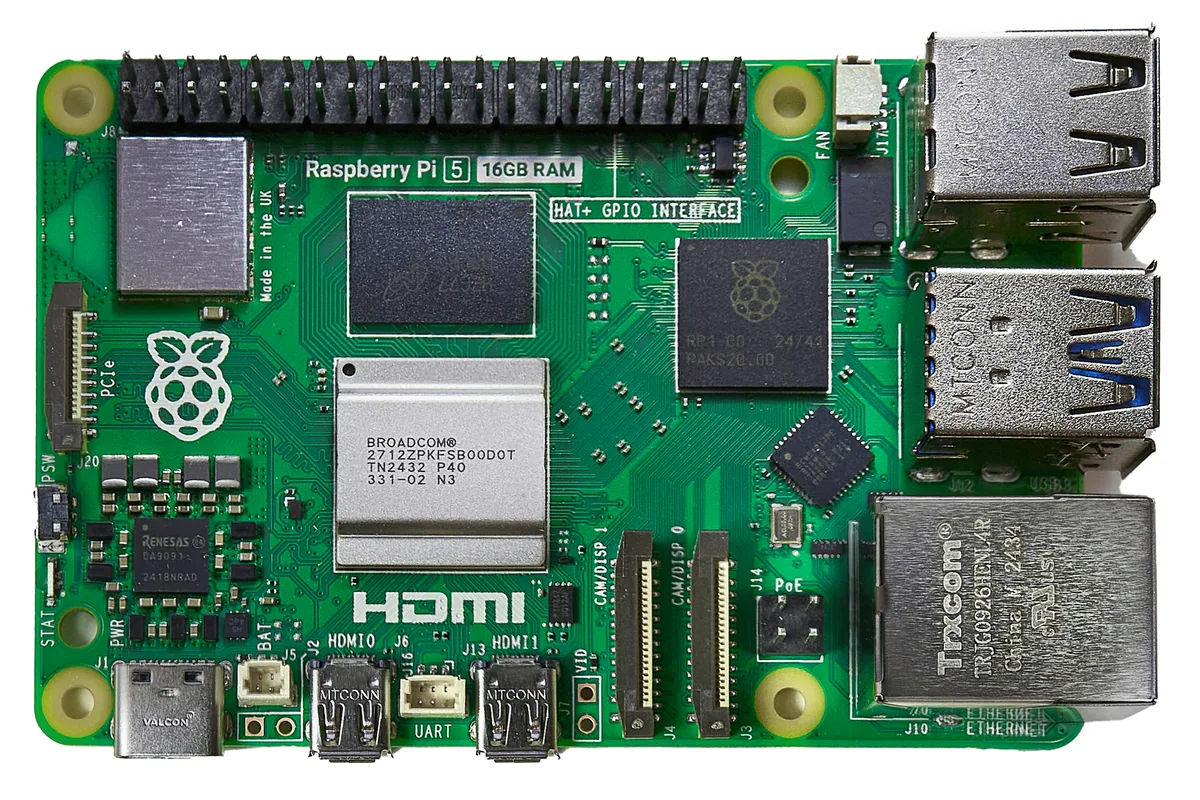
A lot of “self-hosting is cheaper” posts assume a Raspberry Pi 5 as the default box, priced around its original $120 MSRP for the 16GB model. That price no longer exists. We tried to check that 16GB board directly on its own official store page and got $305 — but that fetch ran through the same proxy setup that returned mangled, geolocated pricing on our Google One check, so we’re not treating it as confirmed. The most recent figure we trust is $299.99, reported by Jeff Geerling in April 2026.
That’s not a typo, and it’s not a one-time spike. It’s the end of a run-up:
| Date | 16GB price | Note |
|---|---|---|
| Original MSRP | $120 | baseline |
| ~Dec 2025 | $145 | secondary-sourced, not independently confirmed |
| 2026-02-02 | $205 | officially announced by Raspberry Pi Ltd. |
| 2026-04-01 | $299.99 | per Jeff Geerling’s blog |
| 2026-09-21 | $305 | our own live check, but likely currency/region-mangled — not independently confirmed |
That’s roughly a 150% increase from original MSRP, based on the $299.99 figure, and none of it is about the chip. Raspberry Pi Ltd. put it plainly in its own announcement: “an unprecedented rise in the cost of LPDDR4 memory, thanks to competition for memory fab capacity from the AI infrastructure roll-out,” adding that “the cost of some parts has more than doubled over the last quarter.” The company frames this as temporary and says it intends to reverse the increases once memory prices ease — though there’s no date attached to that.
The February 2026 hike wasn’t limited to the 16GB board, either:
| RAM | Feb 2026 price | Increase |
|---|---|---|
| 1GB | $45 | unchanged |
| 2GB | $65 | +$10 |
| 4GB | $85 | +$15 |
| 8GB | $125 | +$30 |
| 16GB | $205 | +$60 |
The Pi 500 sat at $130 and the Pi 500+ at $260 at that same point.
Other hardware gets mentioned as alternatives, but with weaker sourcing — none of these were independently fetched and priced by us, so treat them as reported, not verified:
- A used mini PC or NAS in the £100–£300 range, per Serverman, said to last well beyond five years
- An AOOSTAR R1 combo around $269
- A Beelink ME Pro 5-bay unit “just over $350”
- Immich’s own stated minimum: commonly given as 6GB of RAM, with 8–10GB recommended when AI features are running, plus 1–2TB for the library itself — though that figure comes from a secondary search snippet, not something we pulled directly from Immich’s own documentation, so hold it loosely
Why you can’t skip Backblaze B2 — an Immich box alone isn’t a backup
The standard advice in self-hosting circles is the 3-2-1 rule: at least two copies of your data, with one of them offsite. A Raspberry Pi sitting in your closet running Immich is one copy, in one place. If it floods, gets stolen, or the drive fails, that’s it.
That’s why B2 isn’t optional in this comparison — it’s the second half of “self-hosting done properly.”
Our own numbers ($6.95/TB/mo storage, $0.01/GB egress) line up with some, but not all, of the coverage on this. XDA’s May 2025 piece quoted B2 at roughly $7/mo for 1TB, which tracks. One search-derived figure claims 2TB of B2 runs $144 a year, which works out to $12/mo — noticeably below the $13.90/mo we found. We’re going with our own number since it came from two independent fetches on the same day, but that gap is worth knowing about if you’re pricing this from an older post.
One more cost hides in the fine print: restoring everything, not just backing it up. A full restore of a 2TB B2 backup would add roughly $20 in egress fees on top of the monthly storage cost — a one-time hit, but real, and something a lot of “how much does B2 cost” posts leave out.
The full math: Google vs. self-hosted, five years out
Put it all together and the picture at 2TB looks like this:
| Setup | Monthly | Yearly | 5 years |
|---|---|---|---|
| Google One 2TB (AI Plus) | $9.99 | $119.88 | $599.40 |
| Self-hosted + B2 backup only | $13.90 | $166.80 | $834.00 |
| + Raspberry Pi 5 16GB, amortized | ~$18.90 | ~$226.80 | ~$1,134.00 |
That last row assumes a $299.99 Pi 5 16GB (the most recent figure we trust — see above) spread over five years — about $60/yr, or $5.00/mo — added on top of the B2 cost. It also excludes electricity entirely. One author elsewhere estimated about $50 a year in electricity for running a drive continuously over a five-year span, but that’s a single person’s own estimate for their own setup, not a verified or general figure, so we’re not folding it into the table above.
If you’d bought that same Pi back at its original $120 price, amortized hardware would only add about $2/mo, putting the self-hosted total closer to $15.90/mo — still more than Google’s bundle at 2TB, but a smaller gap than today’s DRAM-inflated hardware makes it.
I’ll say plainly what I think here: at 2TB, Google’s bundle is the better deal on pure cost, full stop. The self-hosting pitch has to be about control, features, or larger libraries — not “it’s cheaper,” because right now, at this size, it isn’t.
Where the crossover point moves
The “self-hosting is cheaper” posts aren’t lying — they’re wrong by omission: they’re usually right, just not at 2TB.
Serverman’s own long-horizon comparison claims 2TB on Google One runs about £480 over five years, against a £100–£300 one-off NAS or mini PC that “lasts well beyond five years” — and concludes self-hosting wins for bigger libraries. That’s a reasonable read for storage size alone. But that comparison doesn’t mention Backblaze B2, or any offsite backup, at all. Drop in a real backup cost and the crossover point — the library size where self-hosting plus a proper backup finally beats Google — sits meaningfully higher than these posts imply.
Because B2 scales linearly with size ($6.95 × your TB count) while Google’s tiers are flat bands, the math shifts in self-hosting’s favor as libraries grow past a few TB. If you want to check where your own number lands, the formula is simple: monthly B2 cost = your library size in TB × $6.95. Swap in whatever B2’s current rate is by the time you read this.
One objection to all of this: if you already own a NAS or a spare mini PC, the hardware math above doesn’t apply to you, and B2 becomes the only real added cost — which tilts things back toward self-hosting even at 2TB. We’re confident in the Google and B2 numbers here, since we pulled both twice ourselves on the same day. We’re far less confident in the mini-PC, NAS, and electricity figures earlier in this piece, since those came from single, unverified sources rather than anything we checked directly.
FAQ
Is Immich actually free to use? The core application is free and open source. There’s an optional one-time $100 server license for extra features, but it isn’t required to run Immich.
Do I still need Backblaze B2 if I already have an Immich server at home? Under the standard 3-2-1 backup rule cited in self-hosting guidance, yes — a single Immich box in your home is one copy in one location, not a backup. B2 (or something like it) is what makes it a real backup rather than just local storage.
At what point does self-hosting become cheaper than Google Photos? At 2TB, based on what we checked ourselves, it doesn’t — Google’s $9.99/mo bundle beats a B2-backed self-hosted setup once you add even amortized hardware. The crossover likely sits at a higher library size, since B2 costs scale per TB while Google’s plans are flat tiers, but we don’t have a single verified TB threshold to point to — it depends on current B2 and hardware pricing at the time you’re calculating it.
What we don’t know yet: nobody has put a real number on the time cost of running Immich yourself — updates, troubleshooting, the sharing workarounds reviewers mention. And Google’s own pricing page has been unstable enough this year that any tier name or price here is worth rechecking before you commit to either option.
Image credits
- Raspberry Pi 5 — 2025 — 0009-16 by Anil Öztas, licensed under BY (via Openverse)
- Photo by Adriano Ponte Abreu on Pexels